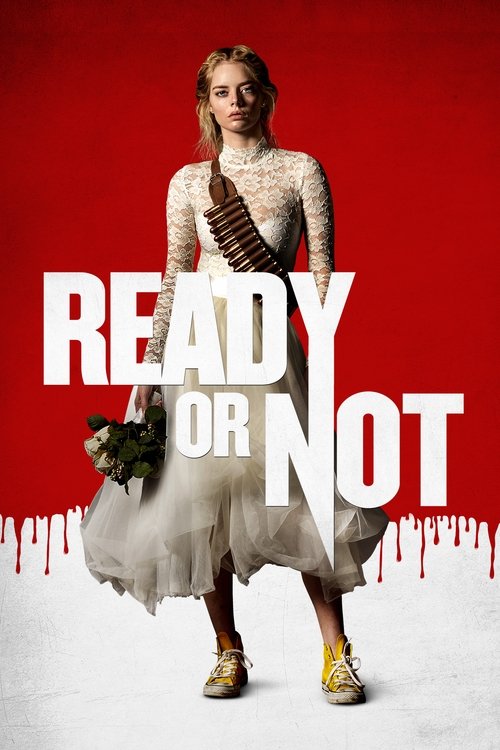
Ready or Not (2019): A Sharp Satire of Wealth and Ritual
Ready or Not is a highly effective dark comedy and horror hybrid that succeeds by treating its absurd premise with just enough gravity to make the stakes feel real. It is a worthwhile watch for viewers who enjoy biting social commentary wrapped in high-tension survival sequences.
The Brutality of Class Conflict
The film excels by framing the horrific game of hide-and-seek not just as a supernatural necessity for the wealthy Le Domas family, but as a grotesque metaphor for the exclusionary nature of extreme privilege. Grace, played with gritty determination by Samara Weaving, serves as the perfect outsider to dismantle the family’s pretentious facade of tradition. The tension is consistently amplified by the contrast between the family’s opulent surroundings and the messy, visceral violence that erupts as the night progresses.
Where the film occasionally stumbles is in its pacing during the second act, as the repetitive nature of the hide-and-seek mechanics threatens to stall the momentum. While many critics praise the family’s bickering as a highlight, I found the comedic banter sometimes undercuts the genuine threat posed by the hunt. It works best when the horror is played straight, allowing the absurdity of the situation to speak for itself rather than relying on constant quips to diffuse the tension.
An Essential Watch for Genre Fans
Those who appreciate films that blend sharp character studies with slasher-style survival will find plenty to admire here. The cinematography by Brett Jutkiewicz captures the claustrophobic grandeur of the estate, turning hallways and dumbwaiters into instruments of terror. If you enjoy stories where the protagonist undergoes a radical transformation from victim to survivor, this film delivers a satisfying arc that feels earned rather than forced.
Conversely, viewers who are sensitive to excessive gore or who dislike films that rely on dark, cynical humor might want to look elsewhere. The narrative is unapologetically mean-spirited toward its antagonists, which is the point of the satire, but it can feel relentless for those looking for a more traditional or heroic horror experience. If you find the premise of a “killer game” too implausible to suspend your disbelief, the film’s commitment to its own internal logic will likely prove more frustrating than entertaining.
The Ritualistic Weight of Tradition
The film’s focus on the pact with the devil serves as a clever device to explore how inherited wealth often comes with a hidden, toxic cost. Tony and Becky, portrayed by Henry Czerny and Andie MacDowell, embody the terrifying banality of evil, justifying their murderous actions through the lens of family heritage and preservation. Their desperation to maintain their status makes them far more menacing than a standard slasher villain.
Brian Tyler’s score plays a crucial role in maintaining this atmosphere, shifting seamlessly from elegant, classical arrangements to frantic, percussive cues during the chase sequences. By grounding the supernatural elements in the mundane reality of a wedding night gone wrong, the film highlights how the most frightening monsters are often those sitting across the dinner table. It is this focus on the domestic horror of the marriage contract that elevates the film above a simple game of cat and mouse.
Ready or Not: Ending Explained
(Spoilers ahead) The conclusion of the film serves as a brutal indictment of the Le Domas family’s reliance on their hollow, ancient pact. By surviving until sunrise, Grace effectively breaks the spell of their perceived necessity, revealing that their commitment to the ritual was ultimately a choice fueled by greed rather than an inescapable cosmic mandate. The final, explosive resolution acts as a karmic correction, proving that the family’s obsession with their own survival was the very thing that ensured their destruction.
Grace’s survival signifies a rejection of the traditional power structures that the family tried to impose upon her from the moment she entered their home. By the time the dust settles, the film reveals that wealth and ritual offer no true protection against the consequences of one’s own depravity. It is a darkly satisfying end that leaves the viewer with the lingering thought that the true horror was never the game itself, but the willingness of the powerful to sacrifice others to maintain their status.