Good Omens (2019) is a Witty, Oddball Fantasy Worth Your Time
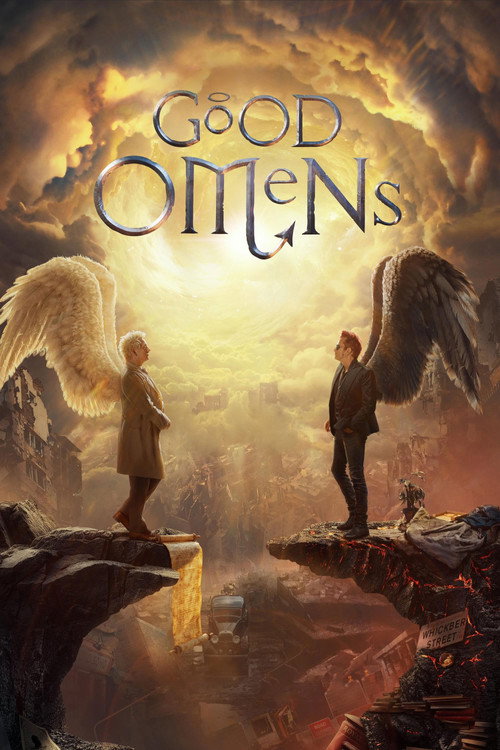
Good Omens is a highly recommended experience for those who enjoy dry, character-driven comedy set against a backdrop of cosmic stakes. It successfully balances the absurdity of an impending Armageddon with the surprisingly tender, long-term partnership of its two celestial leads.
An Unlikely Celestial Partnership
The core of the series lies in the chemistry between Michael Sheen’s fastidious angel Aziraphale and David Tennant’s cynical demon Crowley. Their shared affection for Earth—and specifically its food, drink, and culture—creates a grounded friction that elevates the show above standard fantasy tropes. Watching these two agents of opposing sides conspire to sabotage the apocalypse feels like a natural evolution of their millennia-long acquaintance.
While the mainstream view often focuses on the spectacle of the end times, the show’s true strength is its quiet, domestic intimacy. The decision to frame the apocalypse as a bureaucratic nuisance rather than a terrifying cataclysm is a clever narrative choice. It allows the humor to remain sharp and character-focused, even as the Four Horsemen prepare to ride.
The Bureaucracy of the Divine
The production design and cinematography by Gavin Finney effectively capture the contrast between the sterile, rigid heavens and the chaotic, vibrant reality of the human world. David Arnold’s score adds a whimsical, slightly off-kilter tone that perfectly complements the script’s satirical approach to prophecy and divine planning. The show excels at making the celestial hierarchy feel like a stuffy, dysfunctional corporate office.
However, the pacing occasionally falters when the narrative shifts away from the central duo to follow the secondary cast of humans. While these subplots are necessary to establish the stakes of the Antichrist’s lost location, they sometimes lack the sharp, biting wit that defines the interactions between Aziraphale and Crowley. The show is at its best when it keeps the camera locked on its central pair.
Who Should Watch and Who Should Skip
Viewers who appreciate intellectual, character-focused comedy with a fantasy bent will find much to admire here. If you enjoy stories that treat religious iconography with playful irreverence and prioritize dialogue over relentless action sequences, this series is a perfect fit. It is particularly rewarding for those who enjoy the specific tension of enemies-to-allies tropes executed with genuine warmth.
Conversely, those looking for a high-intensity, action-packed epic might find the slow-burn, comedic tone frustrating. If you prefer your fantasy to be gritty or strictly earnest, the show’s constant leaning into absurdity and its focus on the mundane habits of immortal beings may not resonate. This is a show about the small, human joys of life, not a grand, sweeping war of gods.
A Satirical Look at the End
The series manages to tackle the heavy theme of the end of the world without ever feeling nihilistic or overly bleak. By centering the story on two entities who have grown too fond of humanity to let it go, it offers a surprisingly optimistic take on the concept of free will. It suggests that even in the face of a divine plan, individual choice—and a bit of clever deception—can make all the difference.
The writing keeps a consistent, dry humor that rarely feels forced, even when dealing with complex lore. It is a rare example of a fantasy adaptation that knows exactly when to be silly and when to allow the weight of its premise to land. It is a sophisticated, entertaining look at the absurdity of existence that stays focused on the people, or beings, caught in the middle.