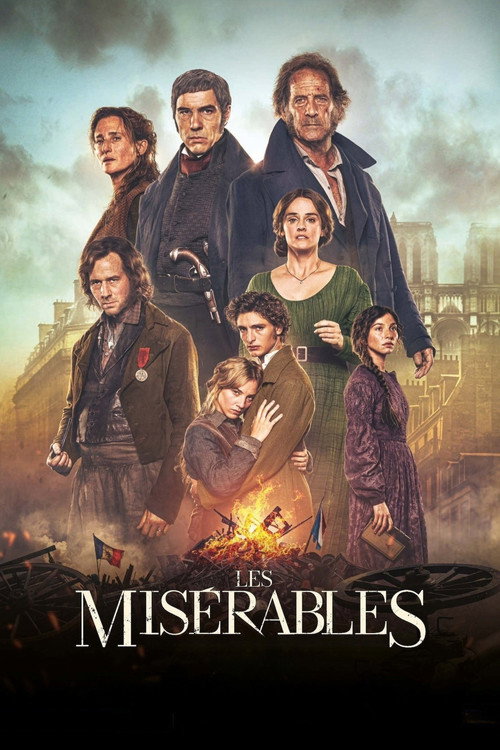
Les Misérables 2026 is a Sturdy but Safe Period Drama
This 2026 version of Les Misérables is an adaptation to be proud of, as it mostly avoids over the top musical theater and focuses on more logical, conventional adaptations. It lacks a distinctive, thematic style and may leave some audiences unfulfilled.
An Academic Approach to a Classic
Director Fred Cavayé does away with the operatic and focuses on the gritty historical to great effect. Although set in the 19th century, it’s gritty realism feels more at home with the 21st century. This allows for a solid, weary and world-wise performance by Vincent Lindon as Jean Valjean, who is a man seeking redemption after spending 19 years in prison. The film rewardingly hits its melodramatic beats with this grounded and real performance and makes the case for why they are deserved.
The cinematography by Denis Rouden captures the foreboding tension of a world on the cusp of revolution. There are times, however, that Cavayé and Rouden’s commitment to structure results in a film that rarely strays from the source material. This makes it feel more like an over-produced reenactment.
Performance and Pacing Challenges
Tahar Rahim’s Javert and Valjean give us needed contrast, and tension, though, the 3-hour length does slow the film at times. Rahim’s take on Javert is cool and calculating, and provides a good contrast to the emotional weight of Camille Cottin and Benjamin Lavernhe’s performances. (Valjean’s wife and son, respectfully) Thénardier’s malice is sharp, and prevents the film from getting too sentimental. Amanda -guessing this is Amanda Warren? – provides much-needed comic relief that’s a welcome addition to the theater of adaptation.
The film’s biggest problem is middle act pacing. The focus on the revolutionary subplots often feels detached from the more central character arcs. Emmanuelle -guessing this is Emmanuelle Raguenel? – is a skilled stager and choreographer, with the crowd scenes feeling alive and active; making this technically a good production. However, a lack of a more creative and controversial twist leaves what should be a compelling and poignant tale for the times feeling relatively bland and flat. Still, I had fun, and the production is worth the big screen experience.
Who Should Watch and Who Should Skip
This film is ideal for audiences appreciative of more traditional, well-crafted period dramas that favor historical accuracy over artistic interpretation. Expect a fairly dialogue-heavy adaptation if that’s what you’re interested in. Fans of the novel will appreciate that the filmmakers took the effort to adpat the novel fairly faithfully, in spite of the absence of the songs. Overall, it’s a polished and fairly traditional adaptation, and will suit audiences who appreciate that kind of thing.
That said, expect a more patient viewer experience for the most part, as the major strengths of the adaptation seem more artistic and less visionary. Fans of more adventurous, artistic, or experimental period pieces will be frustrated and bored. This adaptation isn’t particularly inventive with its approach to the source material either, despite being nearly 3 hours long. For classical studies or art lovers this is a fairly respectful adaptation that will satisfy your needs. There’s really nothing particularly challenging, or even interesting, about this film.