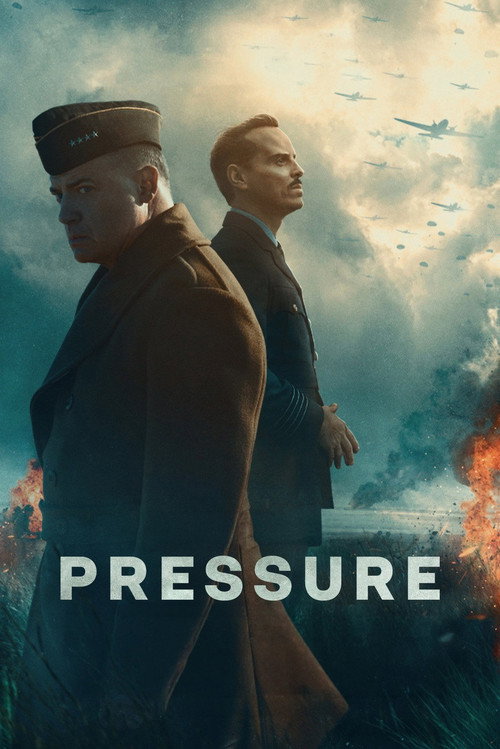
Pressure (2026) is a Tense Study of Bureaucratic Stakes
Pressure is a compelling historical thriller that succeeds by narrowing the scope of the D-Day invasion to a single, claustrophobic room where weather reports dictate the fate of millions. It is an essential watch for those who prefer cerebral, dialogue-driven tension over the typical spectacle of war cinema.
The Weight of Meteorological Certainty
The film thrives on the friction between Captain James Stagg’s scientific caution and the aggressive impatience of military leadership. Andrew Scott portrays Stagg with a brittle, intellectual intensity that effectively anchors the narrative, making the abstract concept of atmospheric pressure feel like a ticking time bomb. The cinematography by Jamie D. Ramsay emphasizes this confinement, using tight framing to turn the headquarters into a pressure cooker where every shift in the wind carries life-or-death consequences.
Where the film occasionally falters is in its reliance on standard argumentative beats between the meteorologists and the generals. While Chris Messina brings a sharp, contrarian energy to the role of Irving P. Krick, some of the scientific debates feel slightly repetitive, dragging the pacing during the middle act. However, this is a minor grievance in a film that otherwise maintains a remarkably consistent level of nervous energy throughout its 100-minute runtime.
Commanding Performances and Historical Friction
Brendan Fraser’s turn as General Dwight D. Eisenhower is the film’s most surprising element, as he avoids the temptation to play the icon as a stoic statue. He captures a man burdened by the crushing weight of command, navigating the treacherous politics between his staff and the volatile Marshall Bernard Montgomery. Kerry Condon serves as a vital grounding presence as Captain Kay Summersby, acting as the necessary bridge between the chaotic war room and the human element of the operation.
This film is a perfect match for viewers who appreciate historical dramas that focus on the “how” rather than the “why” of combat. If you are seeking grand battlefield sequences or explosive action, you will likely find the focus on charts and maps tedious. For those who enjoy watching high-stakes decision-making unfold in real-time, this is a sharp, focused piece of storytelling that treats its historical subjects with refreshing vulnerability.
The Sound of Impending Inevitability
Volker Bertelmann’s score deserves particular mention for its ability to heighten the film’s internal rhythm without resorting to bombastic orchestral swells. The music often feels like the weather itself—a low, persistent hum that mirrors the anxiety of the characters as they await the final report. It is a subtle but effective choice that keeps the audience tethered to the reality of the situation rather than drifting into melodrama.
The screenplay by David Haig and Anthony Maras manages to avoid the trap of turning the meteorologists into heroes of legend. Instead, it highlights the messy, human process of guessing correctly in an environment where no one can truly know the future. By focusing on the fallibility of the men behind the maps, the film creates a much more authentic depiction of the uncertainty inherent in military strategy.
Pressure: Ending Explained
(Spoilers ahead) The conclusion of the film serves as a stark reminder that history is often shaped by the narrowest of margins and the courage to act on incomplete data. When Eisenhower finally commits to the invasion, the relief is not triumphant but exhausted; the film frames the “correct” forecast as a burden rather than a victory. By choosing to launch based on Stagg’s window of opportunity, the leaders accept that they have traded lives for a gamble on the elements. The ending underscores the theme that in war, even the most calculated decisions are essentially leaps of faith taken in the dark, forever altering the trajectory of the world.