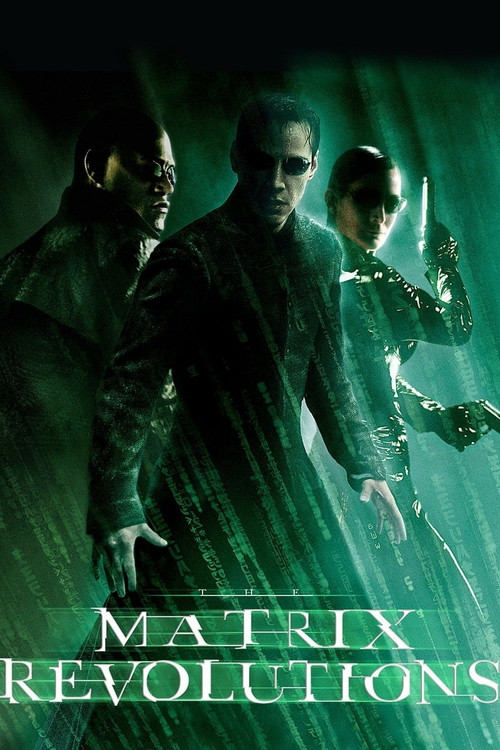
The Matrix Revolutions is a visually bloated finale that struggles to find its soul
The Matrix Revolutions (2003) trades the prior installments’ intellectual curiosity for a distracting, CGI-heavy extravaganza. While it gives a conclusion to the Zion and Machine War, it is shallow thematically and unreflective of the concluding scenes of its predecessors.
When spectacle replaces substance
The film shifts from the philosophical conflicts of the earlier films to all out wars between machine towns. While the Cinematography is still top-notch, digitally enhanced effects give the film a “been there, done that” feel. The defense of Zion becomes just another repetitive, mind-numbing effects laden video game.
Many of the film’s critics pointed out that the sheer volume of special effects give the film an overstuffed feeling, while sidelining characters and their conflicts. Agent Smith and Neo become icons of a high-school-level, philosophical battle of good vs. evil. In place of an interesting story, we get the standard narratives of a “save the world” video game with an inconsequential final battle.
A departure from the franchise roots
The biggest change is dropping the signature wire-fu martial arts. The first film broke new ground by creating an entirely new style of physicality, choreography, and theatrics. They abandoned that by moving towards the expansive and weightless digital fighting, instead of grounded and tactile choreography.
While some may feel comforted that the story has closed its loops, the journey there lacks substance. It tries to tame the philosophical threads from the previous film, but gets rid of the inherent ambiguity that made the story ripe for discussion in the first place.
Who should commit to this final chapter
This movie is for completists only. If you want to see the final frame of this trilogy, by all means watch it. But, don’t expect anything dramatic. And if you are expecting the sharp, socially relevant science fiction thriller from the first movie, you will find yourself checking the time until it ends.
Casual viewers or those looking for character-driven science fiction should avoid this at all costs. It’s a reminder that even the most intricate science-fiction ideas lose their way and die when they expand and focus more on the large scale instead of the human element that made it interesting in the first place.
The Matrix Revolutions: Ending Explained
(Spoilers ahead) The focus of the conclusion is on the uneasy truce or forced synthesis of organics and synthetics. Neo allows himself to be assimilated by Agent Smith, merging with the machine, in order to act as a conduit to ‘delete’ or remove the Rogue program. This will restore ‘peace’ by allowing for a temporary ‘cease fire’ or ‘truce’ in the constant state of war between organic life and digital consciousness. This paradox is best explained by the Machines stopping the invasion yet the constant state of war between organics and synthetics continues. Therefore, even though the Machines stop the invasion, the ‘cold war’ between organics and synthetics will continue. Peace or a temporary ‘truce’ or ‘cease fire’ is the ultimate paradox of the conclusion.