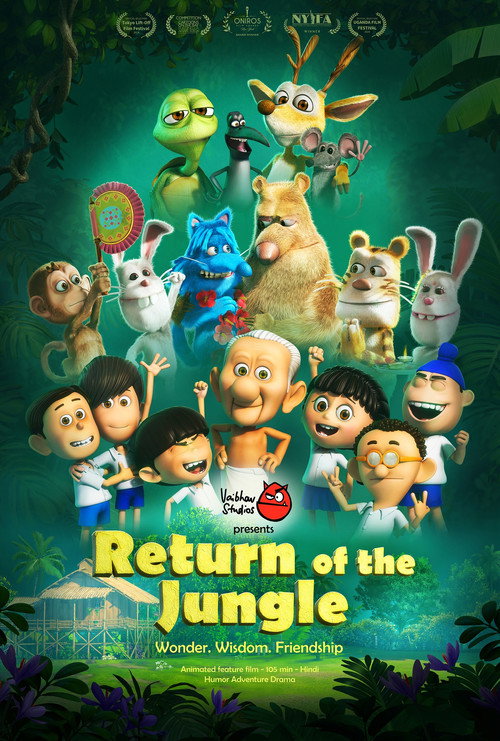
Return of the Jungle (2026) is a Vibrant Lesson in Resilience
Return of the Jungle is a rewarding experience for families seeking an animated comedy that balances whimsical escapism with the grounded anxieties of childhood. While the narrative occasionally leans into predictable tropes, its heart and visual energy make it a worthwhile watch for audiences of all ages.
The film succeeds primarily by grounding its fantastical elements in the very real, high-stakes world of a primary school playground. By juxtaposing the looming threat of Rahul Malhotra with the imaginative, mythic tales provided by Thatha, the story creates a compelling bridge between the internal fears of children and the external pressure to conform or fight back.
Mythology Meets Modern Schoolyard
The decision to weave ancient Indian jungle lore into a contemporary story about school bullying is the film’s most inspired choice. These sequences are visually distinct, offering a lush, vibrant aesthetic that contrasts sharply with the muted, rigid reality of Mihir’s classroom environment. It effectively illustrates how stories serve as a necessary survival mechanism for those feeling cornered by their peers.
However, the transition between these two worlds can feel jarring during the middle act. While the shift is intended to show Mihir’s growth, the pacing loses momentum when the narrative lingers too long on the historical anecdotes. A tighter integration would have allowed the emotional stakes of the cricket match and the journey to Rajasthan to land with even more impact.
A Refreshing Take on Childhood Conflict
Most viewers will likely focus on the high-energy animation and the humorous antics of the protagonists, but the film’s real strength lies in its refusal to paint the bully as a one-dimensional villain. By focusing on the necessity of compassion rather than just brute force, the script offers a nuanced perspective on conflict resolution that feels both earned and necessary.
I found the portrayal of the cricket game to be a standout sequence, not just for the animation quality, but for how it highlights the team’s collective ingenuity. Rather than relying on a traditional hero narrative, the film emphasizes that Mihir’s success is entirely dependent on the specific, unique contributions of his friends. It is a rare, refreshing departure from the solitary protagonist trope common in the genre.
Who Should Seek Out This Adventure
This film is a perfect fit for younger viewers who enjoy high-stakes adventure and for parents who appreciate animation that prioritizes emotional intelligence over spectacle. The themes of determination and the power of collective action are presented with a sincerity that avoids feeling overly didactic or preachy.
Conversely, those who prefer their animated comedies to be fast-paced, non-stop gag reels might find the focus on introspection and character growth a bit slow. If you are looking for a cynical or edgy take on childhood, you should skip this; the film is firmly committed to a tone of genuine optimism that some might find too earnest for their tastes.