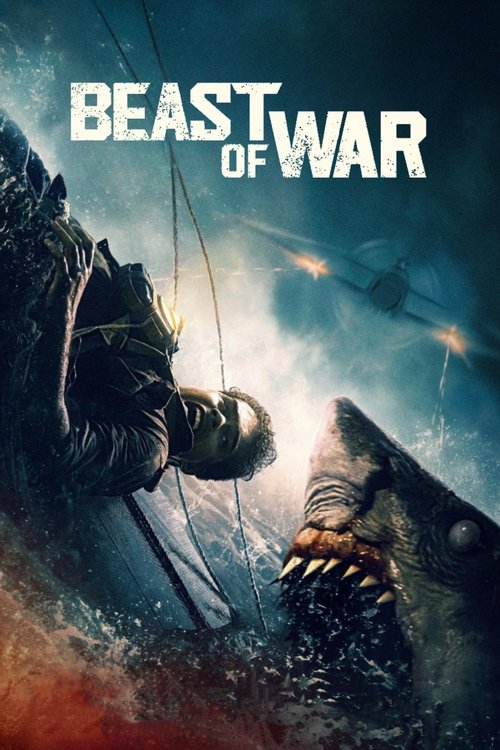
Beast of War: A Tense Survivalist Exercise Worth Your Time
Beast of War is a lean, effective survival thriller that successfully balances the psychological toll of World War II combat with the visceral terror of a relentless aquatic predator. It is a worthwhile watch for those who prefer claustrophobic, high-stakes tension over sprawling war epics.
The film establishes a grim, desperate tone from the opening sequence, effectively blending the historical reality of 1940s maritime warfare with the primal fear of shark-infested waters. By confining the soldiers to a rapidly deteriorating raft in the middle of the Timor Sea, the narrative forces a collision between human fragility and the indifferent brutality of nature.
A Study in Confined Desperation
The strength of the film lies in its commitment to the claustrophobia of the raft, where cinematographer Mark Wareham captures the oppressive heat and the infinite, uncaring horizon. Mark Coles Smith as Leo and his fellow soldiers communicate the mounting panic of their situation through physical performance rather than exposition, grounding the horror in a tangible, sweaty reality.
Where the film occasionally falters is in its pacing during the middle act, as the interpersonal conflicts among the men sometimes feel repetitive compared to the immediate threat of the shark. While these character beats are intended to show the fraying nerves of soldiers, they occasionally stall the momentum that the more aggressive, shark-focused sequences work so hard to build.
The Reality of the Hunt
This is a film for viewers who appreciate survival horror that emphasizes the vulnerability of the human body against a superior natural force. If you enjoy character-driven dramas that utilize a limited environment to push protagonists to their breaking point, the shifting dynamics between characters like Des Kelly and Stan will keep you engaged.
Conversely, those looking for a traditional war film with large-scale tactical maneuvers or complex military strategy should look elsewhere. The film intentionally ignores the broader context of the conflict to focus entirely on the singular, desperate struggle for survival, which may frustrate viewers expecting a more expansive depiction of the 1940s conflict.
Beast of War: Ending Explained
(Spoilers ahead) The conclusion of the film serves as a bleak commentary on the nature of victory in a war where the enemy is not just the opposing army, but the environment itself. By the time the survivors face their final encounter with the great white shark, the distinction between military duty and basic animalistic survival has completely dissolved.
The ending suggests that for these soldiers, the true victory is not in defeating an enemy nation, but in retaining their humanity while being hunted by a creature that knows no ideology. It is a cynical but fitting resolution that emphasizes how the horrors of the 1940s were not only found on the front lines, but in the silent, empty spaces of the sea where no one is watching.