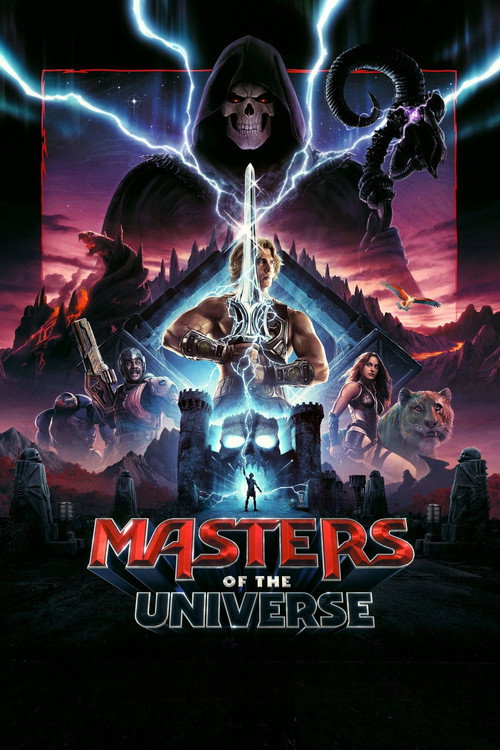
Masters of the Universe (2026) is a Visually Dense Action Fantasy Worth Watching for its Bold Tonal Shifts
This 2026 adaptation of Masters of the Universe succeeds as an earnest, high-stakes science fiction adventure that manages to balance its absurd toy-based roots with a surprisingly grounded emotional core. It is a worthwhile experience for those who appreciate world-building that treats its fantastical elements with genuine gravity rather than cynical irony.
A Refreshing Departure from Camp
The film avoids the temptation to mock its own source material, instead leaning into the inherent strangeness of a world where sword-wielding warriors exist alongside advanced alien technology. Fabian Wagner’s cinematography treats the planet of Eternia as a lived-in, decaying environment, moving away from the bright, sterile aesthetic often associated with properties based on action figures. This visual grit provides a necessary anchor for the high-concept premise, making the transition from Prince Adam’s exile to his return feel earned.
Where the film occasionally stumbles is in its pacing, as the 141-minute runtime struggles to juggle the introduction of the ensemble cast alongside the heavy exposition required to establish the state of the planet. While Idris Elba delivers a steady, authoritative performance as Duncan, the script sometimes forces him into overly clinical dialogue that contrasts sharply with the more vibrant, sword-and-sorcery elements of the narrative. Despite this, the film remains a cohesive experience for fans of epic fantasy who prefer internal logic over lighthearted spectacle.
Character Dynamics and The Skeletor Threat
Nicholas Galitzine brings a vulnerable, hesitant quality to Adam that makes his eventual transformation into the titular hero feel like a genuine psychological shift rather than a mere costume change. His chemistry with Camila Mendes’s Teela provides the emotional backbone of the story, grounding the sprawling galactic conflict in a personal search for identity and belonging. Their dynamic is the most compelling aspect of the film, as it explores the difficulty of reclaiming a home that has been fundamentally altered by fifteen years of oppressive rule.
Jared Leto’s portrayal of Skeletor is a polarizing choice that will likely divide audiences who expect a more traditional, pantomime-style antagonist. By leaning into a cold, calculated menace rather than theatrical villainy, the film frames him as a genuine existential threat to the planet’s stability. Those who prefer their fantasy villains to be larger-than-life may find this interpretation too restrained, but it serves the film’s goal of creating a high-stakes, dangerous atmosphere where the power gap between the hero and his enemy feels insurmountable.
The Sword-and-Planet Aesthetic
Daniel Pemberton’s score is the glue that holds the disparate genres together, blending orchestral swells with synthetic, alien textures that emphasize the hybrid nature of Eternia. The production design successfully merges the medieval architecture of the royal palace with the technological scars left by Skeletor’s regime, creating a visual language that feels distinct from standard superhero fare. It is a rare example of a blockbuster that feels tactile, with the physical weight of the weapons and the environment grounding the more fantastical elements of the lore.
If you are a viewer who demands rapid-fire pacing and constant quips, this film will likely feel too heavy and deliberate for your tastes. However, those who enjoy world-building that prioritizes the internal consequences of a shattered kingdom will find much to admire here. It is an ideal pick for audiences seeking a serious, visually ambitious take on the sword-and-sorcery genre that refuses to apologize for its own inherent absurdity.
Masters of the Universe: Ending Explained
(Spoilers ahead) The conclusion of the film serves as a thematic pivot point, emphasizing that the true power of the Sword of Power is not just in the physical strength it grants Adam, but in its ability to act as a symbol of unity for a broken people. By embracing his destiny as He-Man, Adam realizes that saving his family requires more than just defeating Skeletor; it demands the restoration of the social fabric that the villain systematically dismantled. The ending suggests that the “most powerful man in the universe” is defined not by his ability to conquer, but by his capacity to inspire resistance in others, setting the stage for a broader struggle to reclaim the planet from the remnants of the occupation.