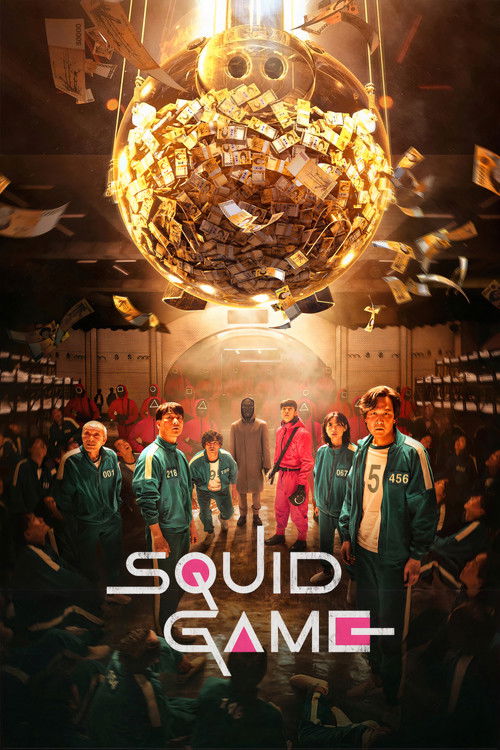
Squid Game (2021) is a Brutal Exercise in Moral Decay
Squid Game is a gripping, high-stakes drama that effectively uses the innocence of childhood games to mask a harrowing survival experiment. While the series succeeds as a visceral critique of desperation, its relentless focus on cruelty occasionally obscures the psychological depth of its participants.
The Architecture of Desperation
The premise of gathering hundreds of cash-strapped individuals to compete for a massive prize creates an immediate, palpable tension. By framing these lethal challenges as simple children’s games, the show highlights the jarring disconnect between playfulness and the cold reality of impending death. This juxtaposition is the series’ greatest strength, forcing the audience to watch as basic human instincts are stripped away in favor of survival.
However, the pacing sometimes stumbles when it leans too heavily into the spectacle of the games themselves. While the visual design is striking, the sheer frequency of the challenges occasionally leaves little room for the characters—like Seong Gi-hun or Detective Hwang Jun-ho—to fully process the trauma they are enduring. The mystery of the secret organization remains compelling, but the focus on the mechanics of the game sometimes sidelines the emotional stakes of the players.
Performances and Genre Dynamics
Lee Jung-jae brings a necessary vulnerability to Player 456, grounding the high-concept premise in a relatable, albeit flawed, humanity. His performance acts as the audience’s anchor, shifting from a desperate man seeking a way out of debt to someone irrevocably changed by the cruelty of the organization. The contrast between his frantic survivalism and the stoic, menacing presence of the Front Man provides a strong narrative tension that drives the series forward.
Where the show occasionally falls short is in the development of the supporting players. While characters like Player 333 and Player 222 are introduced with distinct motivations, their arcs are often sacrificed to advance the plot’s body count. Viewers looking for a character-driven drama may find the rapid turnover of the cast frustrating, but those who enjoy a fast-paced thriller that prioritizes constant, escalating danger will find much to admire here.
Who Should Engage With This Mystery
This series is an ideal choice for viewers who appreciate dark, high-concept narratives that explore the extremes of human behavior under pressure. If you are interested in how social structures collapse when greed and survival are pitted against one another, the show offers a bleak, provocative look at those dynamics. The combination of intense action and a lingering mystery ensures that the momentum rarely flags, even when the narrative turns particularly grim.
Conversely, those who are sensitive to graphic depictions of violence or who prefer a more optimistic outlook on human nature should likely skip this title. The series is unflinching in its portrayal of the death game, and it does not shy away from the darker implications of its premise. If you find nihilistic storytelling exhausting rather than thought-provoking, the relentless cruelty of the competition may prove to be more off-putting than engaging.
Squid Game: Ending Explained
(Spoilers ahead) The conclusion of the series serves as a cynical indictment of the very system that created the games. By revealing the true nature of the organization and the people behind it, the narrative suggests that the ultimate prize is not merely money, but the total corruption of the human spirit. The final choices made by the remaining players underscore the theme that in a world defined by artificial scarcity, true victory is an illusion.
The transformation of the protagonist is the most significant takeaway from the final act. Having witnessed the absolute worst of humanity, the survivor is left not with a sense of triumph, but with a profound, isolating emptiness that mirrors the cold calculation of the game’s creators. This ending forces the viewer to question whether the game ever truly ends for those who manage to escape its walls, as the moral weight of their survival becomes a prison of its own.