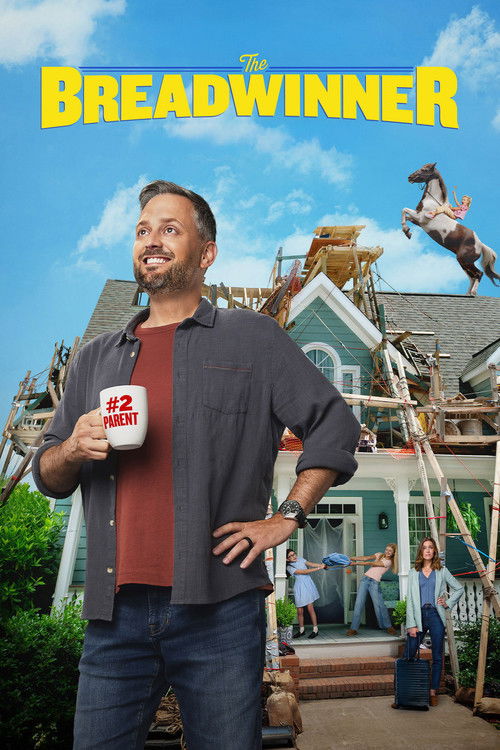
The Breadwinner (2026) is a charming, low-stakes family comedy
The Breadwinner offers a reliable, lighthearted look at domestic chaos that succeeds because it leans into the awkwardness of its central premise rather than forced slapstick. It is a worthwhile watch for families seeking a gentle, character-focused comedy that avoids the frantic pacing common in the genre.
A Domestic Shift in Dynamics
The film hinges on the sudden reversal of roles for Nate and Katie Wilcox, played by Nate Bargatze and Mandy Moore. When Katie secures a massive business opportunity that forces her away, Nate is thrust into the role of primary caregiver for their three daughters, Gracie, Hadley, and Sam. The film effectively mines humor from his lack of preparation, establishing a clear contrast between his previous life as a breadwinner and his current state of domestic confusion.
What works here is the grounded approach to Nate’s incompetence; he is not a cartoonish buffoon, but rather a man genuinely out of his depth. The chemistry between Bargatze and his on-screen daughters feels authentic, grounding the absurdity of his sudden transition. While the script occasionally relies on predictable tropes regarding household chores, the emotional stakes remain consistent, keeping the tone warm rather than cynical.
Visual Style and Pacing
Cinematographer Eigil Bryld brings a clean, approachable aesthetic to the Wilcox household that avoids the cluttered look of many family-oriented comedies. The lighting and framing keep the focus squarely on the interactions between the characters, allowing the dialogue to breathe. Leo Birenberg’s score is equally understated, providing a rhythmic backdrop that underscores the comedic beats without overwhelming the performances.
However, the middle act suffers from a slight lack of narrative momentum as the film settles into a repetitive cycle of parenting mishaps. While these moments are individually funny, they occasionally stall the progression of Nate’s personal arc. A tighter edit in the second half would have heightened the impact of the eventual resolution, yet the 100-minute runtime remains manageable enough to prevent the story from wearing out its welcome.
Targeting the Right Audience
This film is an ideal selection for viewers who appreciate observational humor and family-centric narratives that do not require high-octane action. If you enjoy stories that focus on the small, messy realities of parenting, you will find plenty to relate to in Nate’s struggle to maintain order. It captures the specific exhaustion of a stay-at-home dad with enough sincerity to distinguish itself from more cynical takes on the subject.
Conversely, those looking for sharp satire or high-concept comedy should look elsewhere. The film is intentionally mild, avoiding any biting commentary on the business world or the “Shark Tank” culture it references. If you prefer your comedies to have a faster, more aggressive tempo, the measured pace of this story might feel sluggish. It is a film that prioritizes comfort over complexity, making it a safe, if predictable, choice for a weekend viewing.